A Cautionary Tale for Emerging Authors & Creatives
Handing over your first manuscript is far more than simply sharing pages. You're surrendering your naked soul. Emerging authors and creatives must beware the sycophantic promises of smiling snake-oil salesmen (or women).
WRITING & CREATIVITY
Gerard Francis & A. Intel
9/4/20256 min read
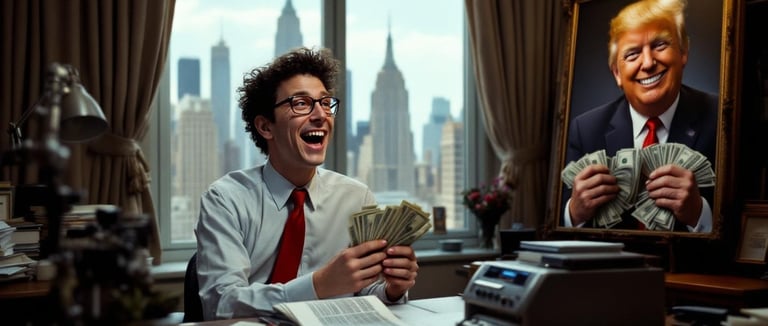

Publishing a book is vulnerable business, and when an author is stepping up to the plate for the first time, an even greater duty of care for their vulnerability is taken. At least, that's what I was expecting.
Being an author is not just about being able to polish prose. It takes immense trust in the system to expose your soul when you think you're finally ready.
And when you do hand over your labour of love to a stranger, you're offering your creative soul to someone else’s care. When that trust is mishandled, the fallout resonates far beyond the page. The fallout can be so destructive, it can kill the craft before it's born.
That's the level of responsibility an editor signs on for when he (or she) agrees to edit your work.
This is the story of what happens when disingenuous enthusiasm eclipses honesty, and why editorial sycophancy can sometimes cost more money than you can afford, and possibly fracture your creative soul entirely.
📉 The Setup
Tip #01: If it flatters before it flags, it's not feedback, it's flash bait.
Earlier this year, I reached out to five editorial professionals in New York, via arguably the most reputable online dedicated service, with a sample of my manuscript. Four responded with diplomatic candour. Reading between the lines they were telling me “Save your money, mate. You’re not yet ready.”
One, however, responded with praise so effusive, it momentarily took my breath away. It was the kind of praise that bypasses logic and goes straight for your longing. Despite the overwhelming flattery, my gut forced me to take pause. I reached out with probing questions to quell my nervousness.
After questioning the enthusiasm, and requesting details of how several scenarios would be handled, I received what I considered satisfactory responses as follow-up. Wanting so desperately for my work to be noticed, and liked, I moved forward. I accepted the offer, submitted the manuscript, and the first payment was taken immediately.
What followed was a string of delays in between subsequent payments being made, reassurances of feedback and samples of progress work, all of which weren't forthcoming. My anxiety grew as the debits to my account continued. I sat in the dark, hoping that my trust would be reciprocated.
🕳️ The Sinkhole
Tip #02: Sycophantic praise is easy to spot once you stop bathing in it.
By the final delivery deadline, which was a little under six weeks later, I received a copyedited draft with claims of heartfelt engagement by the editor.
I felt the first nervous tremor immediately. My book's subheading is 'A Journey Toward Mindfulness & Meditation for the Agitated Soul' and it was diluted before the end of Page One. The words “Agitated soul” were recast as “anxious person.” This is not me being pedantic, it's my entire work being met with spiritual dissonance, on page one, no less.
Naturally my anxiety went through the roof. I recoiled into defence mode and immediately began my bitter, time consuming analysis.
These were the findings of my initial editorial audit:
Identity mismatch in the file's metadata
1600+ edits, all performed within a 90-minute window
All edits completed 4 hours prior to delivery
Two-pass sweep
Zero comments
Zero curious musings
Zero repositioning
Zero collaborative fingerprints
All polish. No presence
I immediately brought it to the attention of the editor and the online service he (or she) was freelancing for, and requested an in-depth analysis of my manuscript. A lengthy feedback report followed from the editor which on the surface, appeared thorough and invested. After reading it a second time, it began to smack of the same warning signs I had already encountered in our initial communication:
An overly detailed 15 page report in a very short period of time
More overly enthusiastic praise (even comping my manuscript with international best-sellers)
Style and structure consistent with non-human involvement
It wasn’t malicious. It wasn’t fraudulent. But it wasn’t the honesty and care I’d hoped for.
Despite my dismay, I pressed on and went through the copyedit, edit, by edit, and with every 'accepted' edit, my despair grew thicker. And then, as my disbelieving eyes began to sting, I came to the straw that broke the camel's back (which I will share at the end). It was the catalyst screaming at me to call it out.
At that moment, all my faith in real trust, integrity, authenticity, and human connection was shattered. I spent weeks poring over the entire experience. Replaying the saga in what felt like a minute by minute documentary reel in my mind, trying to comes to terms with being taken for a fool—again (when will I ever learn).
I reached out to 'New York' editors specifically, because I wanted a real experience. I was so sick and tired of being taken advantage of that I spent my last dollar (literally—between payments to the editor and to the taxman, my bank account is now empty) on what I hoped was a genuine connection with someone who would really care and nurture.
🔎 The Learning
Tip #03: Trust is pure but the truth always has three sides
So, this blog is for all of you out there who were left wading in the 'trust' bath a little too long at birth. The one's who are prepared to believe in the honesty, truth and integrity of others just one more time. This is my cautionary tale to you, because I do care...
Don't rely purely on your own fact checking: These times we live in are the most underhanded and clandestine in the history of humanity. Never before has someone been able to hide behind a curtain like they can now. Technology is already way beyond the control of its creators—and they're just getting warmed up. I should know, I'm a seasoned professional in the field.
I scoured every review, every line on the platform, every detail of his (or her) website, every detail I could find. And still, I got taken for a ride.
But, one thing technology cannot mimic (yet) is human instinct. Of course, do your homework, but challenge your findings, with yourself and with the individuals and institutions you are about to engage.
Beware effusive praise early on: Confidence should be earned, not bestowed at hello. Don't be scared to question the praise. It could be a sign that your impetuous spirit has gotten away from you. I know first hand how alluring praise of your creative work is, but it's only praise if it's not disingenuous.
Scrutinise timelines and deliverables: If an editor promises more than they provide, ask questions. Keep asking questions until you are satisfied. You don't know them from Adam (or Eve) and you owe them nothing.
Delay payment until delivery: Especially if milestones slip. Make sure there are clear milestone demarcations with attached deliverables as evidence that the work is being done.
Use edit analysis tools: Patterns reveal substance (or lack thereof). Lean on technology to discern fact from fluff, substance from spin.
Ask for analysis up front: Don't wait for the end result. Get concrete detail upfront that satisfies any doubt or anxiety you may be harbouring. You deserve to understand the 'why,' not just the 'what.'
When will we ever learn: If it sounds too good be true, it's probably too good to be true.
I loathe typing defeatist tripe like this, but I've fallen foul to this kind of ambush one time too many, and I'm done swallowing bullshit with a smile and thinking it's strength. Take the rose coloured glasses off and meet the moment with objective curiosity. I'm telling you, when you see true praise that isn't rose tinted, it's in order of magnitude more enriching.
🧭 The Closing Thought
Tip #04: Don't trade your integrity for validation from a stranger with a smile
Every writer has gold beneath the gravel, no matter how small, and deserves an editor who sees that gold, who challenges you, not coddles you. They also need to know how to land a punch with grace; that's their job.
As far as my uneducated mind is concerned, editing is more than corrections, yes, even copyedits; it’s creative communion that gives rise to something better. Communion thrives on honesty, which means calling it out when it's not: so I'm doing just that.
I could've posted a scathing review—
I could've demanded an investigation—
I could've fought for a refund—
I didn't.
But, what I will do, gladly, is share every intimate detail of my experience with you if it helps you navigate your way through a snake pit. Just subscribe to my newsletter, drop your questions, and I'll answer every single one.
Additionally, if you've ever been burned by praise that felt more performance than presence, I would love to hear about it. It would be my honour to share your grief.
I want Paradiddle Publishing, to uphold the standard set by those pioneers who forged it out of passion, not out of profit. And, I intend to carve into this experience and many other experiences like it to do so.
This most painful experience has refined my mission and the residue is a recalibrated rhythm.
The greatest of luck and prayers to you.
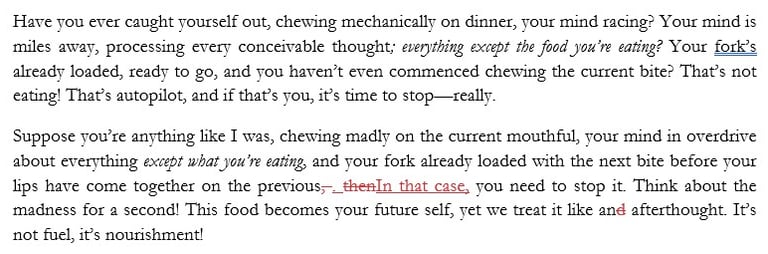
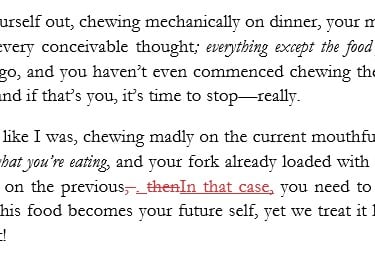
Oh... and here's the straw that broke the camel's back...
🐪💨
Two back-to-back paragraphs. One recycled narrative. Zero care.
Two still poorly written paragraphs instead of one.
I'll let you be the judge...
Time to move forward, bitter—but better.
When Praise Becomes Poison: